
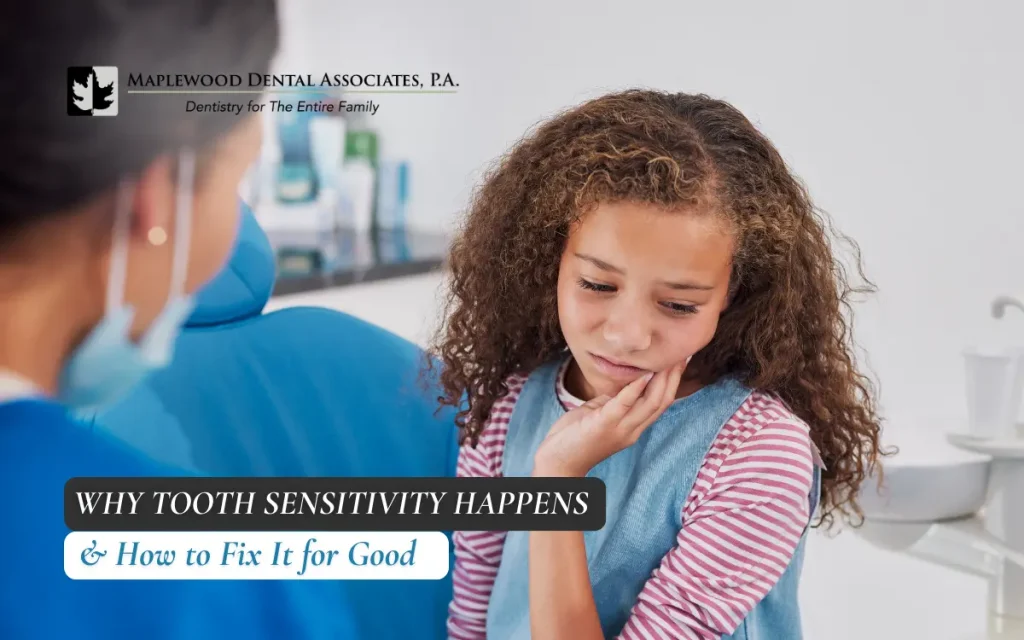
Why Tooth Sensitivity Happens and How to Fix It for Good
Do you feel a sharp zing when you sip hot coffee or bite into ice cream? Tooth sensitivity is common, but it is not something you should ignore. Sensitive teeth can turn simple moments into uncomfortable ones. The good news is that relief is possible, and in many cases, sensitivity can be treated or even prevented.
At Maplewood Dental, we help patients understand why tooth sensitivity happens and what steps can bring lasting comfort. Let’s break it down in a clear, simple way.
What Is Tooth Sensitivity?
Tooth sensitivity happens when the inner layer of your tooth becomes exposed or irritated. This inner layer, called dentin, contains tiny tubes that lead to the nerve. When hot, cold, sweet, or acidic foods touch these areas, the nerve reacts, causing sharp, sudden pain.
Sensitivity may affect one tooth or several teeth. It can come and go, or it may get worse over time if the cause is not treated.
Common Causes of Tooth Sensitivity
There is no single reason for sensitive teeth. Often, it is caused by everyday habits or dental issues that slowly wear down the protection around your teeth.
- Worn enamel
Your enamel is the hard outer layer that protects your teeth. Brushing too hard, using a stiff toothbrush, or grinding your teeth can wear it down over time. Once enamel thins, the tooth becomes more sensitive.
- Gum recession
When gums pull back from the teeth, the roots become exposed. Tooth roots lack enamel, making them more sensitive to temperature and touch.
- Cavities or cracks
Small cavities or tiny cracks in teeth allow irritants to reach the nerve. These problems may not always cause constant pain, but sensitivity is often an early warning sign.
- Recent dental work
Sensitivity can happen after fillings, crowns, or whitening treatments. This type of sensitivity is usually temporary, but it should always be monitored.
- Teeth grinding
Grinding or clenching puts pressure on teeth and wears down enamel. Many people grind at night without realizing it.
Why You Should Not Ignore Sensitivity
Tooth sensitivity is more than just an annoyance. It is often your mouth’s way of telling you something is wrong.
Ignoring sensitivity can lead to worsening pain, deeper decay, gum disease, cracks or tooth damage, and the need for more advanced treatment later.
Early care is always easier, more comfortable, and more affordable.
How Maplewood Dental Diagnoses Tooth Sensitivity
When you visit Maplewood Dental with sensitive teeth, we take the time to identify the underlying cause. Treating sensitivity without understanding why it occurs can lead to short-term fixes rather than real relief.
Your visit may include a careful exam of your teeth and gums, digital X-rays to look below the surface, checking your bite and enamel wear, and reviewing your brushing habits and diet.
Once we identify the cause, we build a treatment plan tailored to your needs.
Effective Treatments for Sensitive Teeth
There is no one-size-fits-all solution, but modern dentistry offers many effective ways to reduce or eliminate sensitivity.
- Desensitizing toothpaste
Special toothpaste can block pain signals from reaching the nerve. Many patients notice improvement within a few weeks of consistent use.
- Fluoride treatments
Professional fluoride strengthens enamel and reduces sensitivity. This is especially helpful for worn or weakened teeth.
- Dental fillings or sealants
If sensitivity is caused by decay or exposed dentin, a filling or sealant can protect the tooth and stop discomfort.
- Gum therapy
For sensitivity caused by gum recession or gum disease, targeted treatment helps restore gum health and reduce exposure to the dentin.
- Nightguards for grinding
If grinding is the cause, a custom nightguard protects your teeth while you sleep and prevents further enamel loss.
Our goal is always to protect your natural teeth and restore comfort.
How to Reduce Sensitivity at Home
Professional care is important, but daily habits also play a big role in managing sensitivity.
- Use a soft-bristle toothbrush
- Brush gently in small circles
- Avoid acidic foods and drinks when possible
- Rinse with water after acidic meals
- Do not brush immediately after eating acidic foods
- Wear a nightguard if recommended
Small changes can make a big difference over time.
Is Tooth Sensitivity Preventable?
In many cases, yes. Preventive care is one of the best ways to avoid sensitive teeth.
Regular dental visits allow us to catch enamel wear early, monitor gum health, spot cavities before they cause pain, and adjust habits that may be damaging teeth.
Professional cleanings and exams every six months help keep your teeth strong and protected.
When to See a Dentist Right Away
You should schedule an appointment if sensitivity lasts more than a few days, pain is sharp or worsening, one tooth is much more sensitive than others, you notice swelling or discoloration, or sensitivity interferes with eating or drinking.
Waiting rarely makes sensitivity better on its own.
Why Choose Maplewood Dental?
At Maplewood Dental, we believe comfort matters. Sensitive teeth can affect your daily life, and you deserve care that is gentle, thorough, and effective.
Patients choose us because we offer personalized treatment plans, advanced diagnostic technology, gentle, patient-focused care, clear explanations at every step, and a friendly, welcoming environment.
We focus on long-term solutions, not quick fixes.
Enjoy Food and Drinks Again Without Pain
You do not have to live with sensitive teeth. With the proper care, you can enjoy hot coffee, cold treats, and everyday meals without discomfort.
If tooth sensitivity is holding you back, Maplewood Dental is here to help. Schedule your visit today and let us find the cause, relieve the pain, and protect your smile for the future.
Your comfort matters, and a healthy, confident smile is always worth it.