
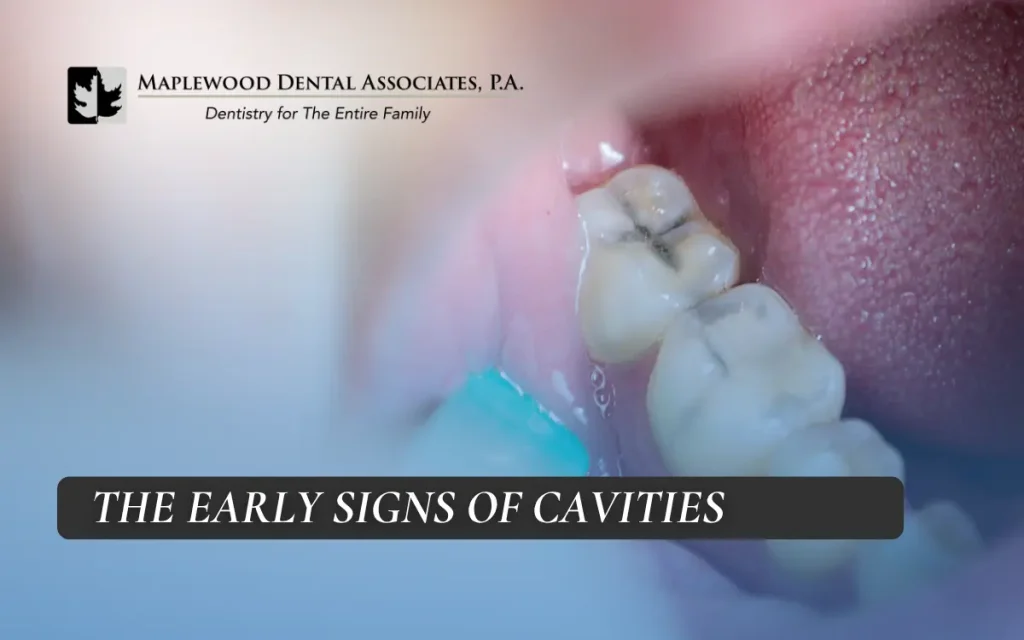
The Early Signs of Cavities Most People Miss
Cavities do not show up overnight. They start small, often without pain, and grow over time. The problem is that many people do not notice the early warning signs. By the time a cavity hurts, it may already need more than a simple fix.
At Maplewood Dental, we believe catching cavities early is the best way to protect your smile. Let’s walk through the signs most people miss and what you can do about them.
What Is a Cavity?
A cavity is a small area of tooth decay. It forms when bacteria in your mouth create acids that wear down your enamel. Over time, this damage creates a hole in your tooth.
Cavities can grow slowly. That is why early detection matters so much.
Why Early Signs Matter
Many people wait until they feel pain before seeing a dentist. But cavities often start without any discomfort.
When you catch a cavity early, treatment is simple. A small filling can quickly fix the problem. If you wait too long, the decay can spread deeper and lead to severe pain, infection, root canals, or even tooth loss.
Early care saves time, money, and stress.
Tooth Sensitivity That Comes and Goes
One of the first signs of a cavity is sensitivity. You may feel a quick, sharp pain when you eat or drink something hot, cold, or sweet.
It may not happen every time, which is why many people ignore it.
Sensitivity can mean your enamel is wearing down or a cavity is starting to form. If it keeps happening, it is time to get it checked.
Small Dark Spots or Stains
Take a close look at your teeth. Do you see small brown, black, or white spots?
These spots can be early signs of decay. They may look harmless, but they often show where the enamel is breaking down.
Not every stain is a cavity, but it is best to have your dentist take a look.
Rough or Uneven Tooth Surfaces
Run your tongue over your teeth. Do you feel a rough spot or small pit?
Healthy teeth should feel smooth. If something feels off, it could be early decay.
Even tiny holes can grow into bigger cavities if left untreated.
Mild Pain When Biting or Chewing
If you feel a small twinge when you bite down, do not ignore it.
Pain while chewing can mean a cavity is forming or getting deeper. It may not be constant, but it is a warning sign that something is wrong.
Chewing should never hurt. If it does, your dentist can find the cause and fix it early.
Bad Breath That Does Not Go Away
Bad breath happens to everyone sometimes. But if it sticks around, it could mean bacteria are building up in your mouth.
Cavities create small spaces where bacteria can grow. This can lead to ongoing bad breath, even if you brush regularly.
A professional cleaning and exam can help find the source and restore fresh breath.
Food Getting Stuck More Often
Do you notice food getting stuck in the same spot over and over?
This can be a sign that a cavity is forming between your teeth. As decay weakens the structure, small gaps can develop.
If flossing does not fix the problem, it is worth getting checked.
Bleeding Gums Near One Tooth
Bleeding gums are often linked to gum disease, but they can also point to a cavity near the gumline.
If one area bleeds more than others, it may be a sign of irritation caused by decay or buildup.
Healthy gums should not bleed easily. This is another signal to pay attention to.
Why Cavities Are Easy to Miss
Cavities can hide in places you cannot see, like between teeth or under the gumline. They also do not always cause pain right away.
That is why regular dental visits are so important. Your dentist can spot early signs that you may not notice at home.
Preventive care helps catch small problems before they become big ones.
How Dentists Catch Cavities Early
At Maplewood Dental, we use simple tools and technology to find cavities early.
During your visit, we will check your teeth for soft spots or damage, look for signs of enamel wear, take X-rays if needed, and clean away plaque and tartar.
These steps help us find decay before it causes pain or serious damage.
Simple Ways to Prevent Cavities
The good news is that cavities are preventable. Small daily habits make a big difference.
Brush twice a day with fluoride toothpaste, floss once a day, drink water often, limit sugary snacks and drinks, and visit your dentist every six months.
Even the best home care cannot remove all plaque. Professional cleanings are key to maintaining your teeth’s health.
When to See a Dentist
Do not wait for pain. If you notice any of the signs above, it is better to act early.
Call your dentist if you have ongoing sensitivity, pain when chewing, dark spots on your teeth, or bad breath that will not go away.
Early treatment is always easier and more comfortable.
Protect Your Smile for the Long Term
Cavities may start small, but they can grow quickly if ignored. Paying attention to early signs helps you stay ahead of problems.
At Maplewood Dental, we focus on prevention first. We want to help you keep your natural teeth strong, healthy, and pain-free.
If it has been a while since your last visit or you have noticed any changes in your teeth, now is the time to take action.
Schedule your appointment today and keep your smile strong for years to come.