
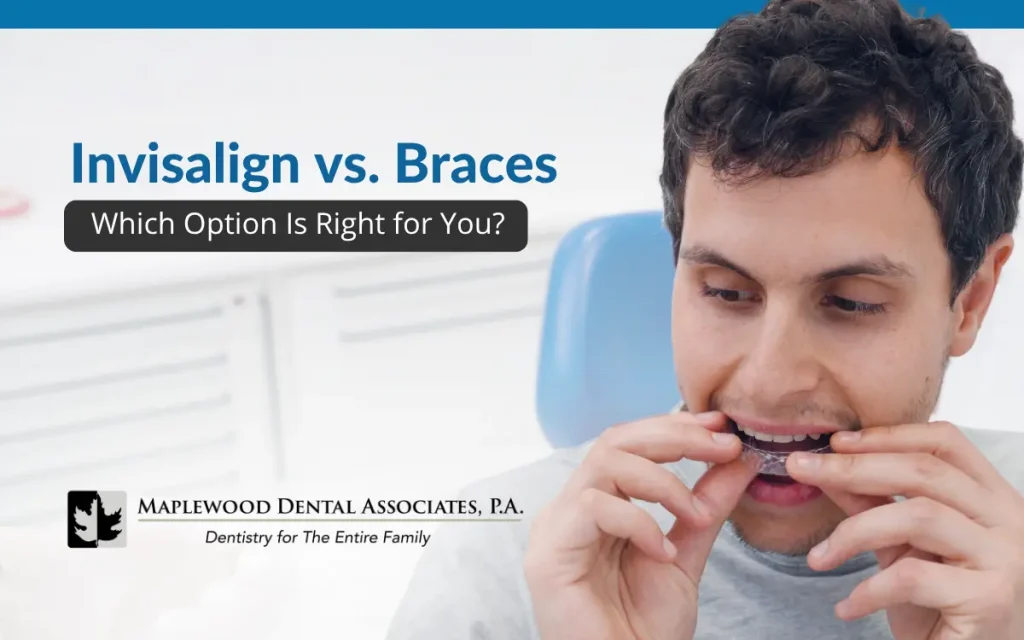
Invisalign vs. Braces: Which Option Is Right for You?
A straight smile does more than improve appearance. It can boost confidence, make cleaning your teeth easier, and improve your overall oral health. If you are considering straightening your teeth, you may wonder whether Invisalign or traditional braces is the better choice.
At Maplewood Dental, we help patients choose the treatment that fits their smile, lifestyle, and goals. Both Invisalign and braces can create beautiful results, but each option works differently.
Let’s compare Invisalign and braces so you can feel confident about your decision.
Why Straight Teeth Matter
Crooked or crowded teeth are not only cosmetic concerns. Misaligned teeth can make brushing and flossing harder, increasing the risk of cavities and gum disease.
Straightening your teeth can help:
- Improve your bite
- Reduce uneven wear
- Make cleaning easier
- Boost confidence
- Improve speech and chewing
Orthodontic treatment is an investment in both your smile and your long-term health.
What Is Invisalign?
Invisalign uses a series of clear plastic aligners to move your teeth into place gradually. Each set of aligners is custom-made for your smile.
You wear the aligners most of the day and switch to a new set every one to two weeks as your teeth shift.
Because Invisalign aligners are clear, they are much less noticeable than braces.
What Are Traditional Braces?
Traditional braces use metal brackets and wires attached to your teeth. Over time, the wires are adjusted to guide your teeth into the correct position.
Modern braces are smaller and more comfortable than older versions, and they remain one of the most effective ways to treat complex alignment issues.
Invisalign Benefits
Many patients choose Invisalign because of its convenience and appearance.
Nearly Invisible
The clear aligners are hard to notice, making Invisalign popular with teens and adults.
Removable
You can remove the aligners when eating, brushing, and flossing. This makes oral hygiene easier than with braces.
No Food Restrictions
With Invisalign, you can continue eating your favorite foods because you remove the trays before meals.
Comfortable Fit
The smooth plastic aligners do not have sharp wires or brackets that may irritate your mouth.
Fewer Office Visits
Invisalign often requires fewer adjustment appointments compared to braces.
Invisalign Drawbacks
Invisalign works well for many patients, but it is not perfect for everyone.
Requires Discipline
You must wear the aligners for 20 to 22 hours each day for the treatment to work correctly.
Easy to Misplace
Since the aligners are removable, they can get lost or damaged.
Not Ideal for Every Case
Severe bite problems or complex tooth movements may still require braces.
Benefits of Traditional Braces
Braces remain a trusted and highly effective orthodontic treatment.
Works for Complex Cases
Braces can treat severe crowding, bite problems, and complicated tooth movements.
Always Working
Because braces stay attached to your teeth, you do not have to remember to wear them.
Great for Children and Teens
Braces are often a good option for younger patients who may struggle to keep track of removable aligners.
Reliable Results
Braces have been successfully straightening teeth for decades.
Braces Drawbacks
Like any treatment, braces also have challenges.
More Noticeable
Metal brackets and wires are easier to see than clear aligners.
Food Restrictions
Sticky, hard, or chewy foods can damage braces.
More Difficult Cleaning
Brushing and flossing around brackets takes extra time and care.
Possible Discomfort
Wires and brackets may sometimes irritate the inside of the mouth.
Which Option Is Faster?
Treatment time depends on your specific needs.
Some Invisalign cases may finish in as little as 12 months, while braces often take 18 to 24 months. However, complex cases may take longer with either option.
The best way to estimate treatment time is to consult your dentist.
Which Option Costs More?
The cost of Invisalign and braces is often similar, depending on the complexity of treatment.
Some dental insurance plans may help cover orthodontic treatment. At Maplewood Dental, we can discuss payment options and help you understand your coverage.
How Maplewood Dental Helps You Decide
Every smile is different. At Maplewood Dental, we take the time to understand your goals, examine your teeth, and recommend the treatment that best fits your needs.
We consider:
- Your bite and alignment
- Your lifestyle
- Your age
- Your treatment goals
- Your budget
Our team will explain every option clearly so you can feel comfortable moving forward.
A Straighter Smile Starts Here
Whether you choose Invisalign or braces, the most important thing is taking the first step toward a healthier smile.
Straight teeth can improve your confidence, oral health, and quality of life. At Maplewood Dental, we are here to guide you through the process and help you achieve results you will love.
Schedule your consultation today and discover which orthodontic option is right for your smile.