
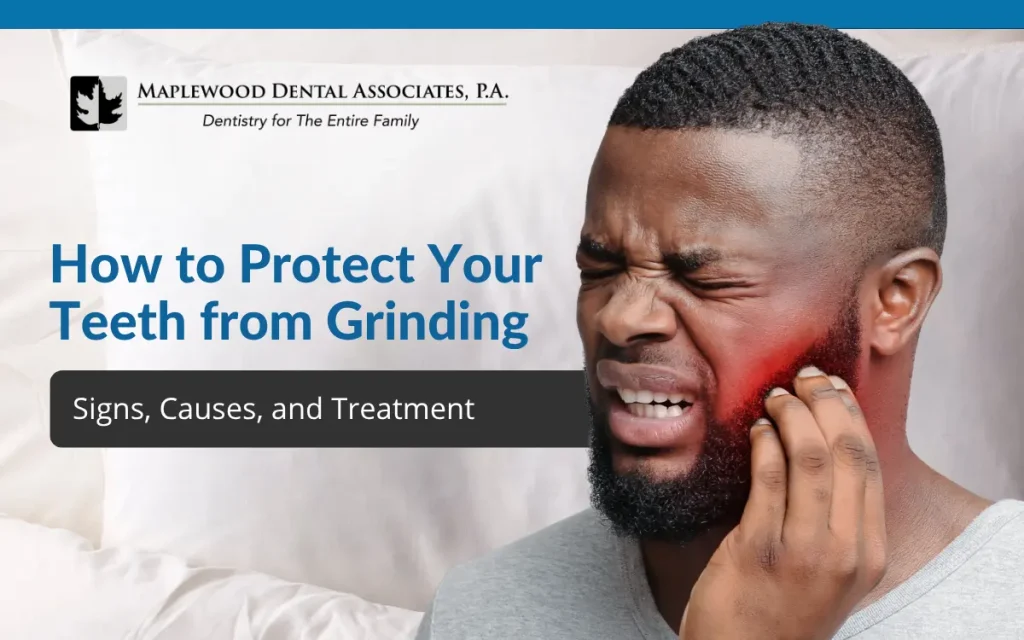
How to Protect Your Teeth from Grinding: Signs, Causes, and Treatment
Most people think teeth grinding only happens during the day, but many people grind or clench their teeth while they sleep without even realizing it. This condition, called bruxism, can wear down your teeth, cause jaw pain, and lead to expensive dental problems if left untreated.
At Maplewood Dental, we help patients recognize the signs of teeth grinding early and provide personalized treatment to protect their smiles. If you often wake up with headaches, sore jaw muscles, or sensitive teeth, bruxism could be the cause.
What Is Teeth Grinding?
Teeth grinding, also known as bruxism, happens when you clench, grind, or gnash your teeth. Some people do it while they’re awake, but it most commonly occurs during sleep.
Because it often happens unconsciously, many people don’t know they grind their teeth until a dentist notices signs of damage during a routine exam.
Bruxism can affect both children and adults and ranges from mild to severe.
Common Signs of Teeth Grinding
Many symptoms of bruxism develop slowly over time. You may notice:
- Jaw pain or tightness
- Frequent morning headaches
- Tooth sensitivity
- Worn or flattened teeth
- Chipped or cracked teeth
- Earaches without an ear infection
- Clicking or popping in the jaw
- Facial muscle soreness
Sometimes a spouse or family member may hear grinding noises while you sleep before you notice any symptoms yourself.
What Causes Bruxism?
There isn’t one single cause of teeth grinding. Instead, several factors may contribute to the condition.
Common causes include:
Stress and Anxiety
Stress is one of the most common reasons people grind their teeth. Many people clench their jaw without realizing it during stressful situations or while sleeping.
Sleep Disorders
Conditions such as sleep apnea can increase the risk of nighttime teeth grinding.
Bite Problems
Teeth that do not fit together properly may encourage grinding or clenching.
Lifestyle Factors
Drinking large amounts of caffeine, smoking, or consuming alcohol may also increase your risk.
Your dentist can help determine what may be contributing to your symptoms.
How Teeth Grinding Can Damage Your Smile
Teeth are incredibly strong, but constant grinding places tremendous pressure on them.
Over time, bruxism can lead to:
- Worn enamel
- Cracked teeth
- Broken fillings
- Loose teeth
- Jaw joint problems (TMJ disorders)
- Increased tooth sensitivity
In severe cases, teeth may become so worn that they require crowns or other restorative treatments.
The sooner teeth grinding is identified, the easier it is to protect your smile.
How Is Teeth Grinding Diagnosed?
During your regular dental exam, your dentist will look for signs of grinding.
These may include:
- Flattened chewing surfaces
- Small cracks in teeth
- Worn enamel
- Tender jaw muscles
- Changes in your bite
Your dentist may also ask questions about headaches, jaw pain, or sleep habits to help determine if bruxism is present.
Treatment Options for Teeth Grinding
Fortunately, there are several effective ways to manage bruxism.
Custom Night Guards
One of the most common treatments is a custom-made night guard.
Unlike store-bought mouthguards, custom night guards are designed specifically for your teeth. They create a protective barrier between your upper and lower teeth while you sleep, helping prevent further damage.
Stress Management
If stress contributes to your grinding, relaxation techniques such as exercise, meditation, or improving your sleep routine may help reduce symptoms.
Bite Adjustments
In some cases, correcting bite issues can reduce excessive pressure on certain teeth.
Restorative Dental Care
If grinding has already damaged your teeth, treatments such as dental crowns or fillings may be recommended to restore strength and function.
How to Reduce Teeth Grinding at Home
While professional treatment is often necessary, you can also help reduce grinding by:
- Limiting caffeine later in the day
- Avoiding chewing on pens or ice
- Practicing relaxation techniques before bed
- Maintaining a consistent sleep schedule
- Being aware of daytime jaw clenching
These habits can help reduce strain on your teeth and jaw.
When Should You See a Dentist?
Don’t ignore ongoing jaw pain or worn teeth.
Schedule an appointment if you experience:
- Frequent headaches
- Jaw soreness
- Sensitive or cracked teeth
- Difficulty opening or closing your mouth
- A partner notices you grinding while sleeping
Early treatment can prevent more serious dental problems in the future.
Why Choose Maplewood Dental?
At Maplewood Dental, we understand that every patient is different. We take the time to identify the cause of your teeth grinding and recommend the treatment that best fits your needs.
Our team provides:
- Comprehensive dental exams
- Custom night guards
- Restorative dentistry
- Personalized treatment plans
- Gentle, compassionate care
Our goal is to help you protect your natural teeth and enjoy a healthy, comfortable smile.
Protect Your Smile from Teeth Grinding
Teeth grinding may seem like a small problem, but over time it can lead to serious damage. The good news is that early treatment can prevent worn teeth, jaw pain, and costly dental procedures.
If you think you may be grinding your teeth, contact Maplewood Dental today to schedule an evaluation. Together, we’ll create a plan to keep your smile healthy, strong, and protected for years to come.